Instructions
How to play
Clear the nucleus of every atom in the periodic table with antimatter, from hydrogen to oganesson. Along the way you learn the elements' names, symbols and structure.
Fire through the gaps
Each atom is drawn as a Bohr model: a nucleus of protons and neutrons, with electrons circling in shells.
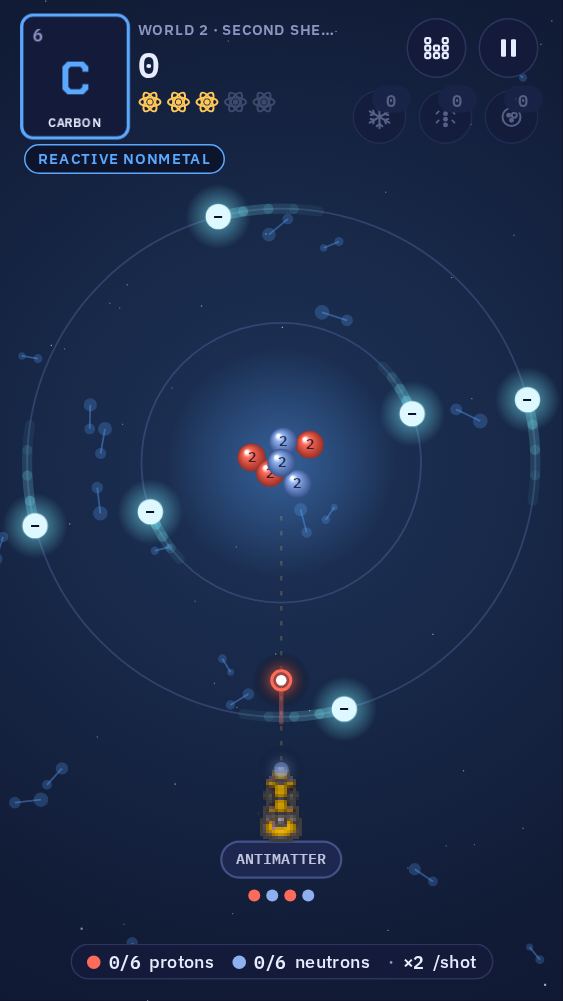
- Tap anywhere to fire. On a computer, click or press Space.
- Time your shot so it passes through the gaps between the electrons.
- If you hit an electron, the atom is ionized. What that costs depends on your difficulty level.
- When the nucleus is empty, the element is cleared.
Two kinds of ammunition
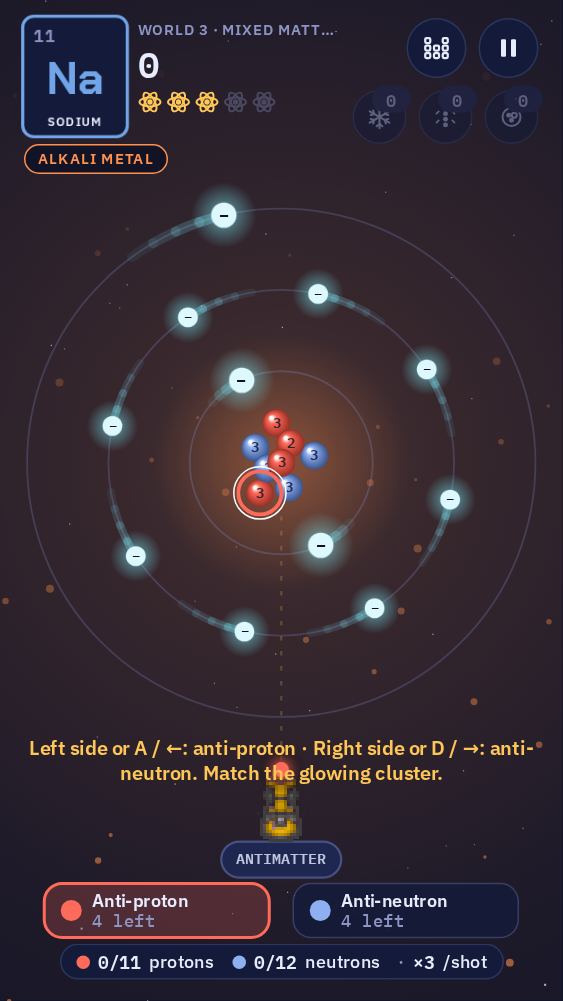
From World 3 you have both anti-protons and anti-neutrons. Tap the left side for anti-protons and the right side for anti-neutrons (on a computer: A or ←, and D or →). Match the glowing cluster that faces you: red at red, blue at blue.
Three difficulty levels
Choose your difficulty level on the game menu. Each difficulty level keeps its own progress, stars and best score. What you have reached on a harder one is also open on the easier ones, but not the other way round.
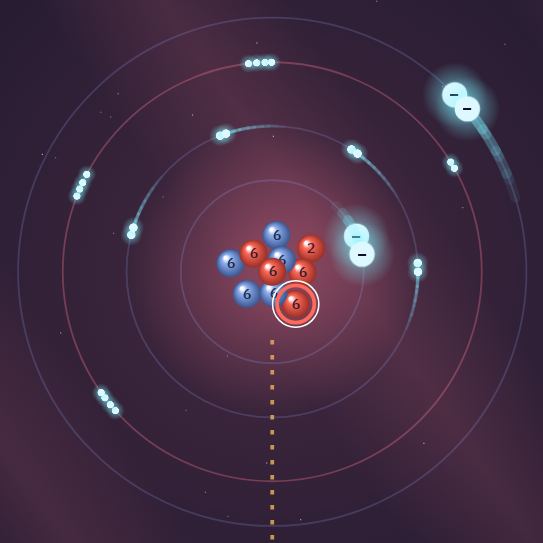
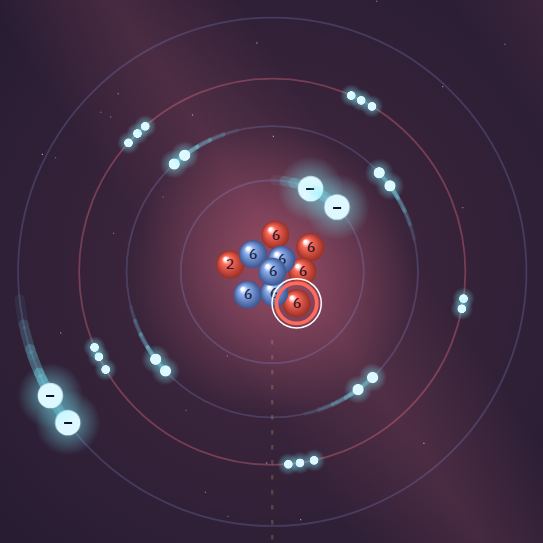
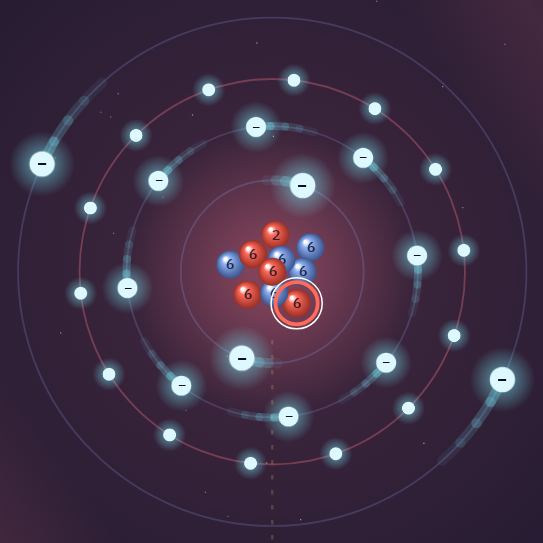
- Student: slow electrons, and the aim line lights up when the way is clear. From World 3 the electrons gather in bundles. A hit costs no life, and the nucleus keeps what you have cleared.
- Researcher: slower electrons. From World 4 they gather in small bundles. You start with 3 lives. A hit costs a life, but the nucleus keeps what you have cleared.
- Bundles: every atom is first shown with its electrons spread evenly, as in the Bohr model. After a few seconds they gather in bundles, which leaves wider gaps to fire through. The number of electrons in each shell stays the same, and the card after each element shows the atom spread out again.
- Professor: single electrons at full speed. You start with 1 life, and a hit starts the element over.
- Clearing an element pays a bonus as Researcher (+50%) and as Professor (+100%).
Lives
- As Researcher and Professor, every element you clear without hitting an electron gives you one more life, up to 5.
- Out of lives? You go back to your last checkpoint. Your stars stay.
- If an element keeps beating you, the game offers to let you carry on one difficulty level easier, without losing your place.
Cards and quizzes
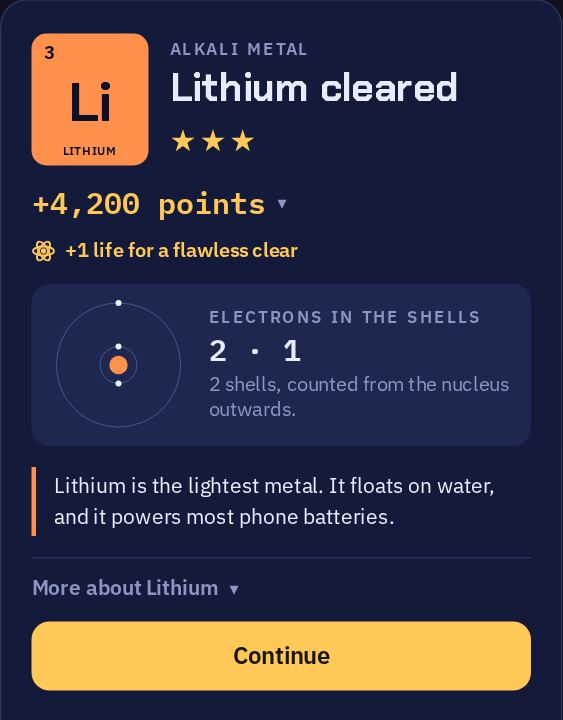
After each element you get a card with a fact about it, and then a quiz question about the next element.
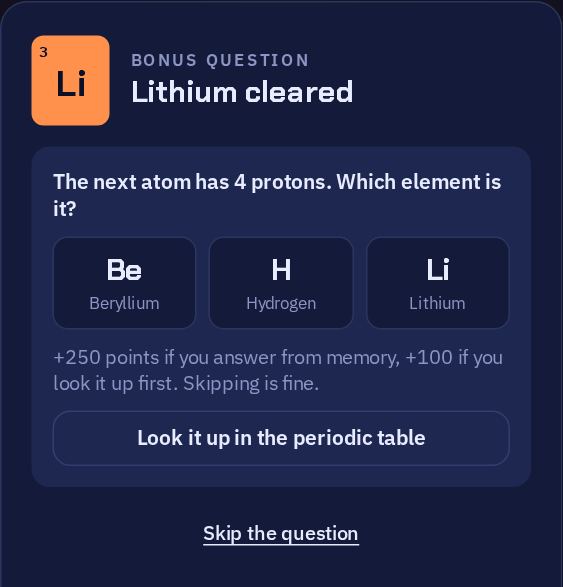
- +250 points if you answer from memory, +100 if you look it up in the periodic table first. Skipping is fine.
- Sometimes the question is to build an atom: you choose how many protons, neutrons and electrons it has. The atoms come in order, starting with hydrogen.
- Between two worlds there is a bigger question. Answer it correctly to open the next world.
- The speaker button reads the question aloud. In Settings you can have every question read automatically.
Power-ups
Tap a power-up's button to use it (on a computer: C, S and X).
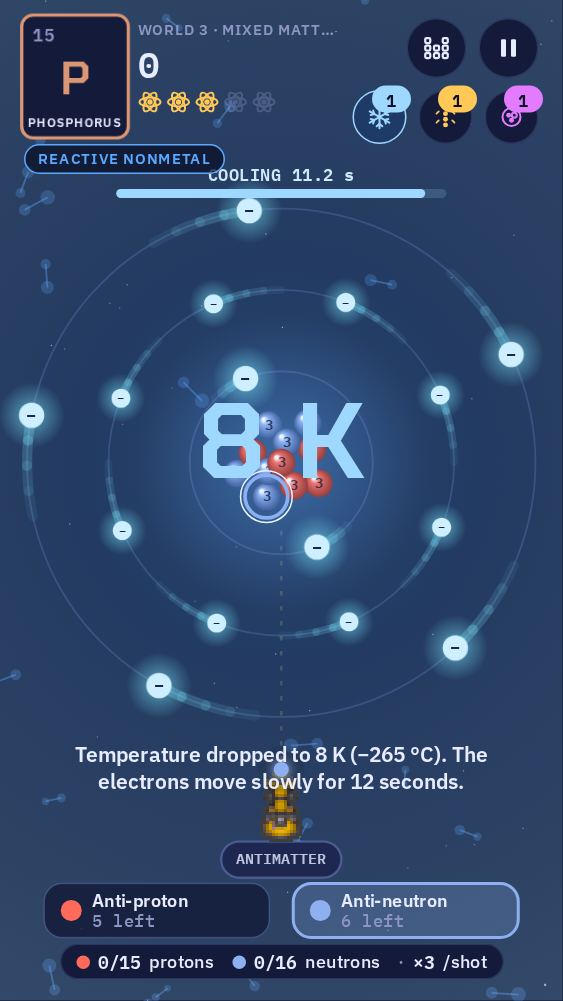
- Electron cooler: the electrons move slowly for 12 seconds. You get one for every 10,000 points.
- Particle shower: your next shot fires 5 particles in one stream. You get one for 3 correct quiz answers in a row.
- Anti-nucleus: clears the whole nucleus in one shot, but gives 2 stars at most. You get one for 6 correct quiz answers in a row and for beating a boss level.
Stars
- 1 star for clearing an element.
- 2 stars for clearing it without hitting an electron.
- 3 stars for doing that quickly.
- Play an element again from the periodic table to earn more stars.
Bosses
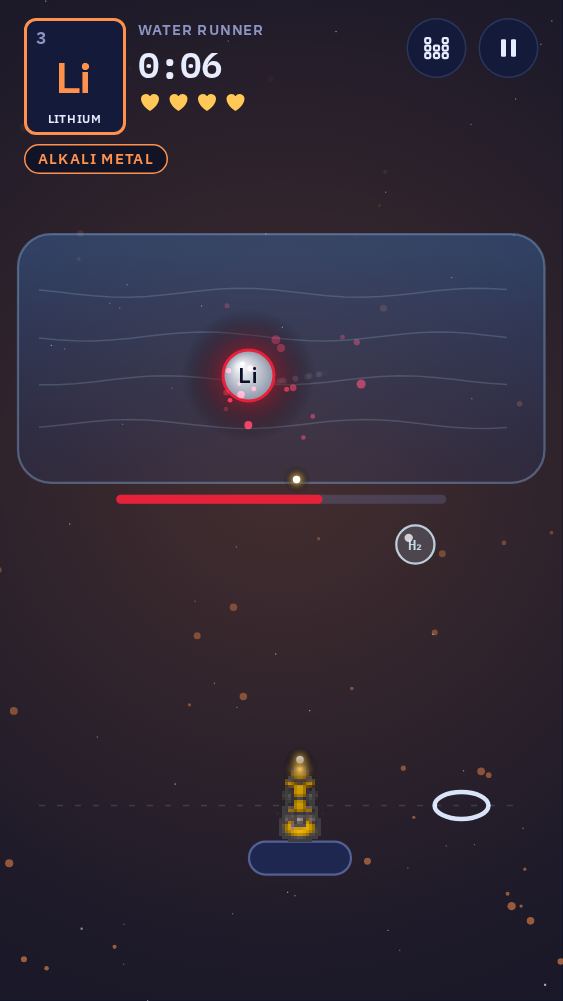
The last element in each world is a noble gas. It is a boss level: every shell is full, and everything moves faster.
When you have cleared a few elements from the same group, a bonus boss for that group unlocks, in bronze, silver and gold. In Boss training you can try every boss without scoring points.
More ways to play
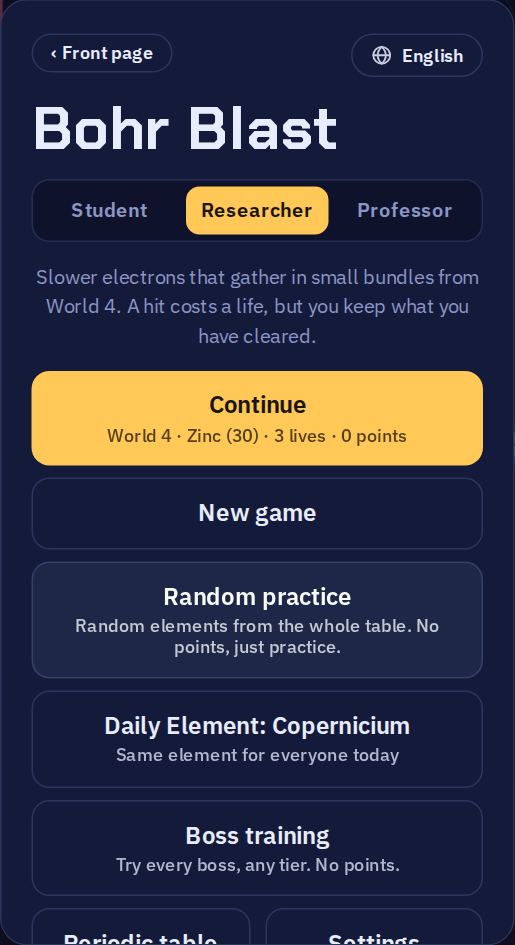
- Daily Element: the same element for everyone each day. Clear it to keep your streak going.
- Random practice: random elements from the whole table. No points, just practice.
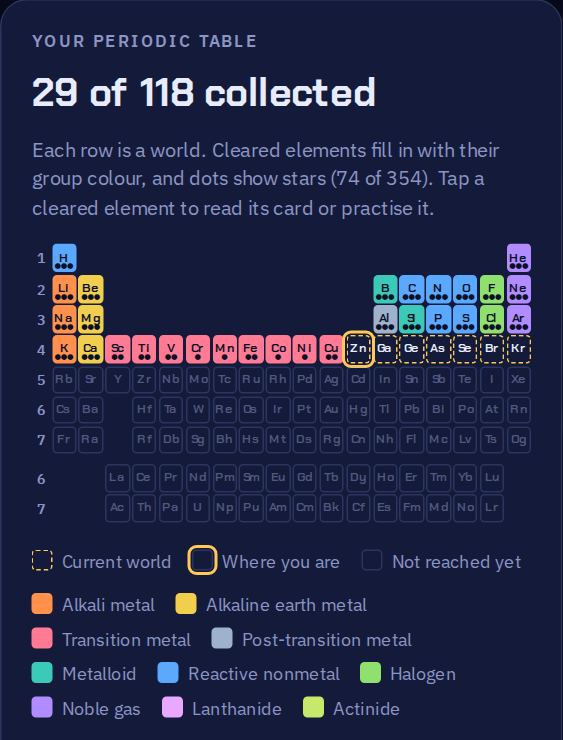
- Periodic table: see what you have collected. Tap a cleared element to read its card or practise it.
Playing with your class
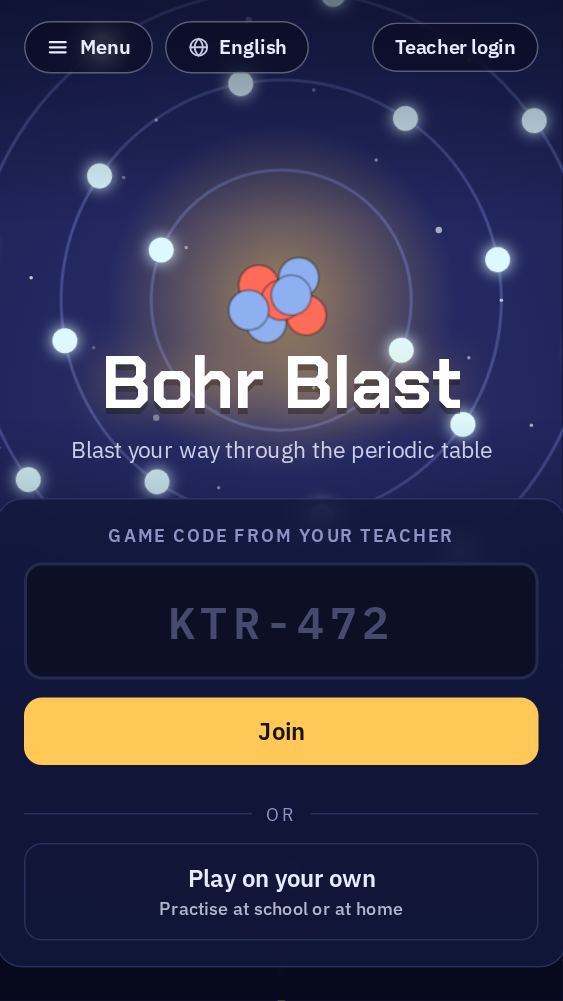
Your teacher gives you a game code. Type it on the front page, choose a name and wait for the round to start. Your teacher chooses the difficulty level. In a round there is no game over: hitting an electron costs 250 points instead.
Your progress
Your progress is saved on this device only. On another device you start again.